
Written by our friends at NoFraud
For subscription brands, retention is everything. You spend months — sometimes years — optimizing acquisition, onboarding, and lifecycle messaging to keep customers subscribed. You know your churn reasons by heart: too much product, didn’t feel the effects, financial pressure, forgot to pause.
But there’s one area where many subscription brands still lack clarity:
Why are customers returning product — and who’s abusing the system?
As return rates climb and refund abuse becomes more sophisticated, subscription brands face a delicate balancing act. Crack down too aggressively and you risk alienating loyal subscribers. Stay too lenient and bad actors quietly erode margins.
The solution isn’t stricter rules. It’s a better understanding of intent.
The Hidden Cost of Returns in Subscription Commerce
Return fraud and policy abuse aren’t new challenges, but they affect subscription brands differently than traditional eCommerce.
Subscriptions create ongoing customer relationships through recurring payments, replenishment cycles, pause and skip flows, and long-term purchase histories. In theory, this gives subscription brands richer behavioral data than one-time merchants.
In practice, returns are still often evaluated as isolated events rather than part of a broader customer story.
The result is familiar: serial returners hiding behind legitimate subscriptions, “friendly fraud” masked as dissatisfaction, refunds driven by confusion rather than product failure, and one-size-fits-all policies that frustrate loyal customers.
The real challenge isn’t identifying that a return happened. It’s understanding why.
Cancellation Reasons vs. Return Reasons: A Subscription Blind Spot
Most subscription brands are excellent at understanding cancellation intent. They know when customers have too much product, fail to see results quickly, experience payment issues, or simply forget to pause.
Returns, however, often lack that same level of insight.
Was the product returned because it was misunderstood? Because shipping delays caused frustration? Because of a one-time quality issue? Or because the customer never intended to keep it in the first place?
Without intent-level context, all of these behaviors look the same. And that’s where brands lose money and trust.
Why Intent Matters More Than Ever
Not every refund request is policy abuse. In fact, many aren’t. The danger comes from treating a loyal subscriber with a one-off issue the same as a high-frequency returner exploiting policies.
Understanding intentionality allows brands to:
- Protect margins without blanket restrictions
- Preserve trust with high-value subscribers
- Intervene earlier when behavior signals abuse
- Design return policies that are fair — and enforceable
Intent is the difference between customer care and customer leakage.
Seeing the Full Picture: Where Data Comes Together
For subscription brands, intent isn’t revealed by a single action. It emerges from patterns over time. A return only becomes meaningful when it’s evaluated alongside customer lifetime value, purchase frequency, tenure, and broader behavioral signals. When this subscription data is viewed together, brands can distinguish between loyal subscribers experiencing a one-off issue and customers repeatedly exploiting return policies.
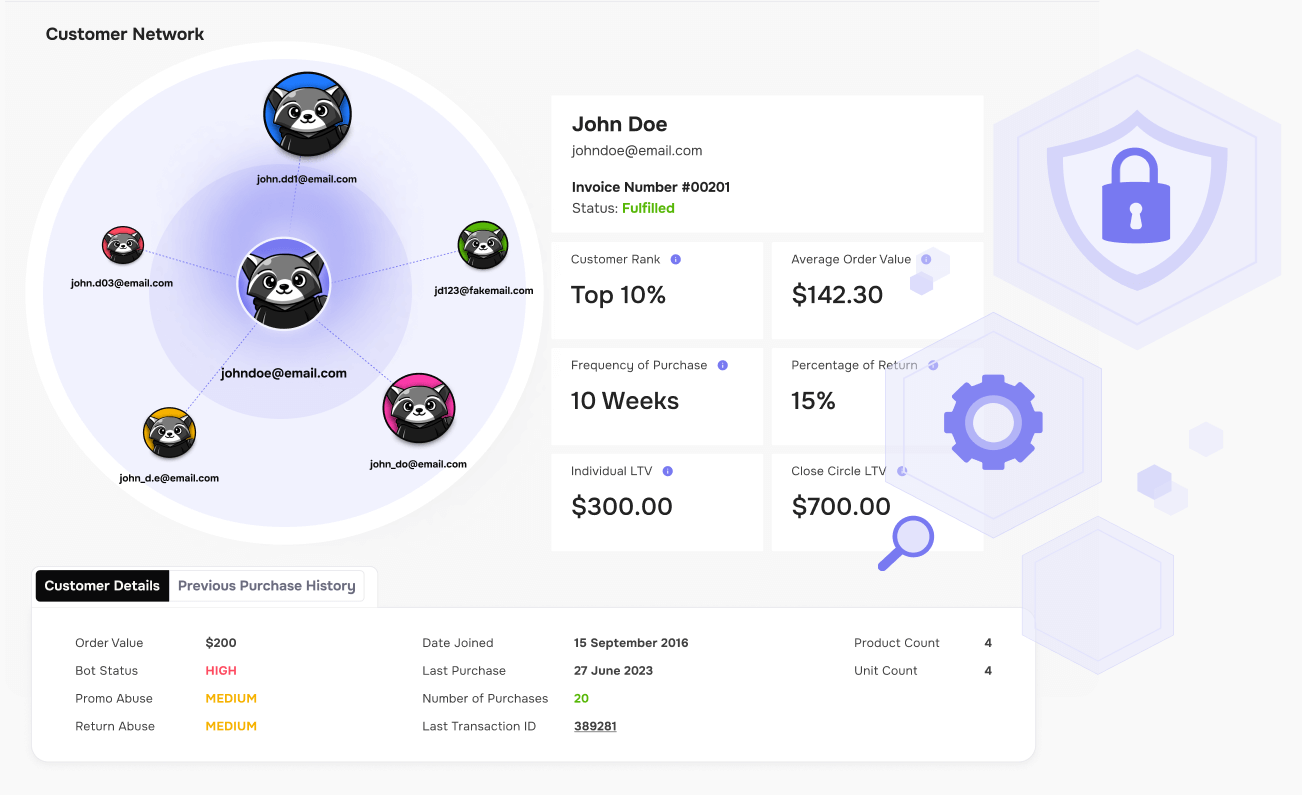
A holistic customer profile brings together lifetime value, purchase cadence, return behavior, and network-level signals to provide context around refund requests. In this example, a high-value, long-tenured customer may show moderate return activity — but their overall behavior signals loyalty rather than abuse. This level of context allows subscription brands to respond fairly, rather than relying on rigid rules that treat all returns the same.
How Intent-Aware Decisions Are Powered
An intent-aware view doesn’t come from a single platform or signal. It’s created by connecting insights across the subscription lifecycle — from payment behavior to engagement patterns to return history.
Each layer adds context. Together, they allow brands to move beyond surface-level return metrics and make decisions grounded in behavior, not assumptions.
Subscription Intelligence: Understanding Customer Behavior Over Time
Stay AI already helps subscription brands understand why customers stay, pause, or cancel. That same behavioral intelligence can be extended beyond churn into post-purchase and post-delivery experiences. The platform is leading the industry in retention marketing with next-generation tools that deliver deeper, faster insights into subscriber behavior at critical stages of the customer lifecycle.
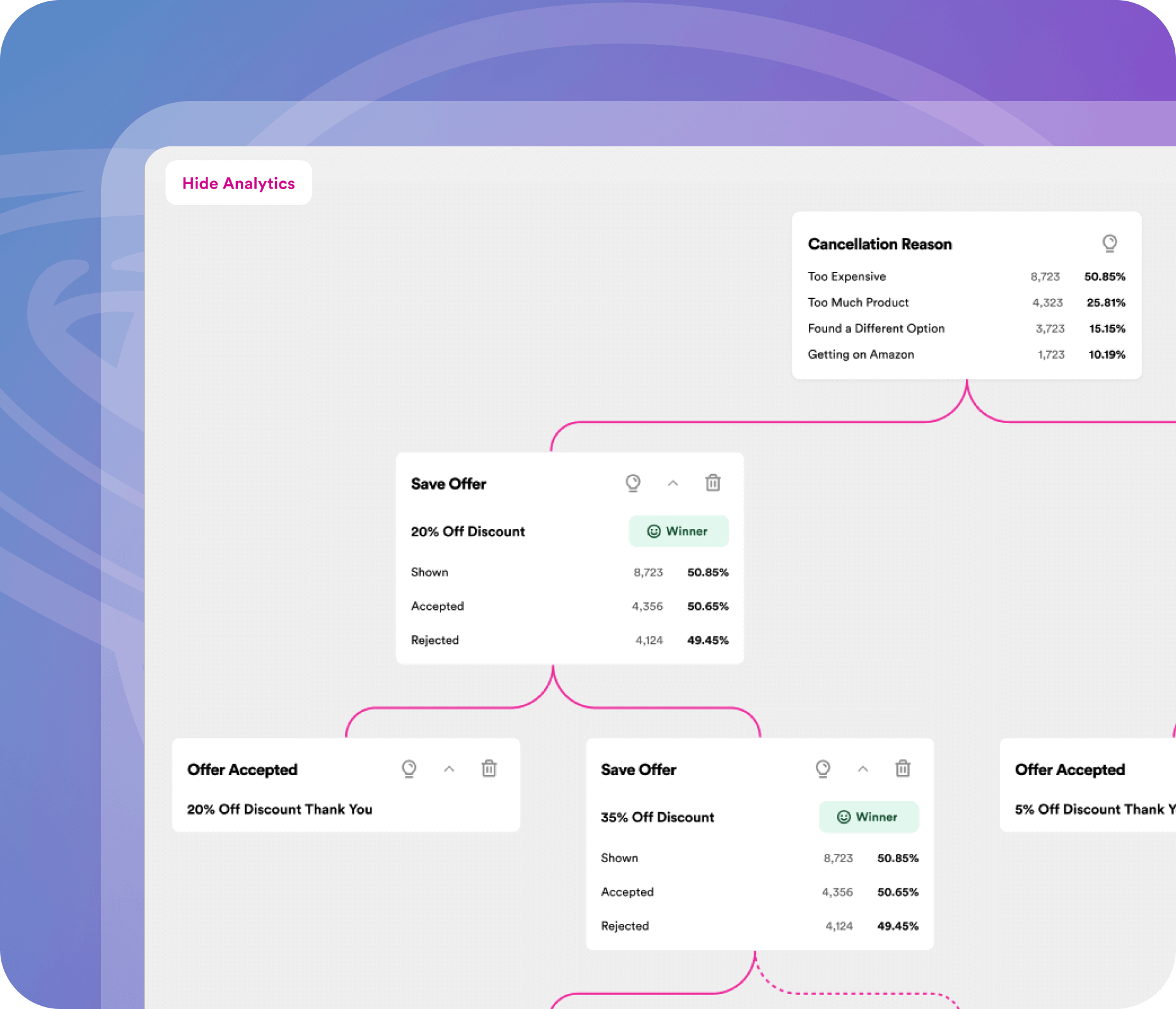
By analyzing engagement patterns, subscription tenure, payment outcomes, and customer responses across pause, cancel, and retention flows, brands gain critical context around whether a return reflects genuine dissatisfaction, temporary friction, or behavior inconsistent with long-term loyalty.
Return-Specific Signals: Identifying Policy Abuse
Return behavior requires its own lens. Yofi, a NoFraud company, adds precision by identifying patterns that indicate return fraud or policy abuse, such as excessive or repeat returns over time and attempts to exploit return or refund loopholes, including abuse disguised as otherwise normal subscription activity.
This ensures that return decisions aren’t based on assumptions, but on documented behavior across shopper history.
Transaction-Level Risk: Stopping Bad Actors Earlier
NoFraud completes the picture by identifying high-risk transactions before they enter the ecosystem.
Through real-time transaction screening at checkout, NoFraud helps brands block fraudulent purchases before fulfillment, reduce downstream refunds, take control of chargeback management, and separate bad actors from legitimate subscribers earlier in the lifecycle.
When transaction-level risk data is combined with subscription behavior and return history, brands can distinguish between opportunistic abuse, prevent friendly fraud, and determine what is actually legitimate dissatisfaction.
From Blanket Policies to Intelligent Enforcement
When intent is clear, return policies get smarter. Instead of reacting with blunt measures — shortening return windows for everyone, eliminating refunds entirely, or introducing friction-heavy processes — subscription brands can enforce policies with nuance and confidence.
Intent-aware enforcement makes it possible to offer flexibility to trusted subscribers while automatically restricting repeat abusers. High-risk returns can be routed for review, and customers returning out of confusion can be proactively educated before frustration turns into churn.
This approach doesn’t just protect margins. It supports subscriber retention.
Returns and refunds quietly shape the subscription experience. Abuse increases operational costs, excessive refunds strain payment relationships, and confusing return flows often accelerate cancellations. At the same time, bad actors distort the behavioral data brands rely on to make decisions across retention, lifecycle messaging, and payments.
When brands understand intent across subscriptions, payments, and returns, they unlock a more resilient revenue engine that protects profits without punishing loyalty.